Corebound
- 4.8
- Rating
- 1.00M
- Installs
- Free
- Price

 Analysis by App-foxy
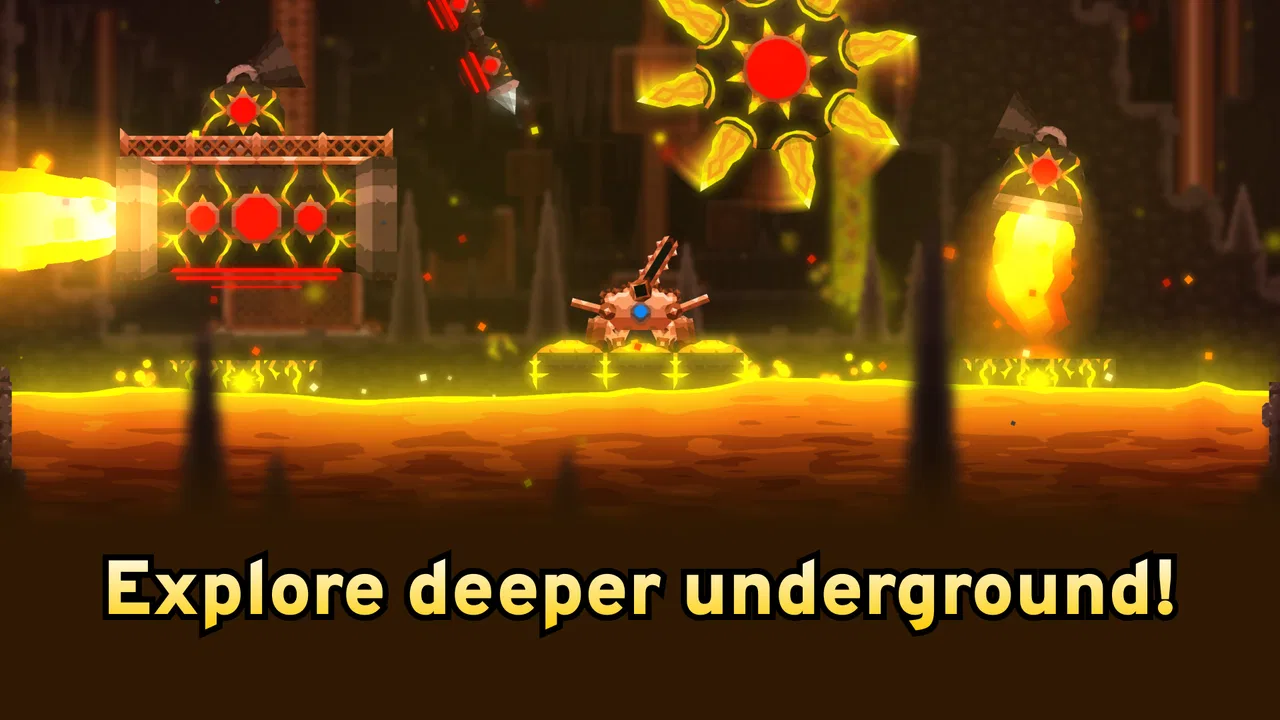
Corebound is an action game from Overcurve that puts a simple idea at the center of each run: fight robots, gather the parts they leave behind, and use those parts to make your character stronger. I found the appeal easy to understand within minutes. It is built for players who enjoy a steady loop of combat and improvement, but it also asks an important question before you commit time or money: how much of the experience feels rewarding on its own, and how much pressure comes from spending?
That question matters because this is a free game with optional purchases priced from $4.99 to $49.99 per item. I would not treat that range as a reason to avoid it automatically, but I would approach progression with a little awareness. The game works best when I focus on learning its rhythm rather than expecting every upgrade to arrive immediately. Its age rating is Everyone, and the minimum operating system is Android 7.1, so it is accessible to a broad range of Android players.
How the robot-hunting loop feels in practice
The strongest part of the experience is the connection between combat and improvement. Robot encounters are not just obstacles placed between menus; they are the source of the parts that make the next stage of the character possible. That gives ordinary victories a useful purpose. Even when a fight is not especially memorable, I still feel that it contributes to the next upgrade instead of disappearing into a meaningless score.
You May Also Like

 Blood Strike: 2.5 Anniversary
Blood Strike’s Loadouts Turn Every Drop Into a Tactical Gamble
A close look at Blood Strike’s custom loadouts: how fast access to signature weapons reshapes its battle royale rhythm, rewards preparation, and narrows the gap between fights.

 Pandora - Music & Podcasts
Pandora’s Music Is Easy to Start, but Harder to Recover
Pandora’s strength is its low-effort path from a seed to a station. Its weak spot is how much confidence it asks you to place in connection, setup, and quiet recovery.

 8 Ball Pool
 Is Built on Rivalries, Rematches, and Routine
A close look at the rivalries, rematches, shared routines, and unanswered safety questions that turn a quick pool match into a persistent mobile community.

 Samsung Music
’s Quiet Strength Is Playing What You Already Own
Its reach comes less from spectacle than from dependable access to a personal library. That simplicity is both the app’s strongest retention engine and its ceiling.

 AccuWeather: Weather Radar
AccuWeather Review: A Quick, Clear Forecast for Everyday Decisions
For everyday plans, the best forecast is the one you can understand quickly. AccuWeather makes rain timing, radar, and local conditions easy to act on, with a few trade-offs.

 Hill Climb Racing
Why Hill Climb Racing Still Turns Crashes Into One More Run
A tiny car, a bumpy hill and one more upgrade: Hill Climb Racing keeps resurfacing because its simple chaos makes every near-miss feel personal.
More From Our News Desk
View All News


I especially like this structure for short sessions. If I have a few minutes while waiting for an appointment, I can jump in with a clear objective: defeat enemies, collect what they drop, and turn that material into progress. The game does not need a long story setup to make the session worthwhile. Its motivation comes from the immediate promise that the next improvement may change how comfortably I handle the following encounter.
There is also a satisfying mental shift as the character develops. Early on, I pay attention to survival and basic efficiency. Later, I start thinking more carefully about whether I should push forward or play more cautiously, depending on how valuable the current run feels. That decision-making is more interesting than simply tapping through battles without considering the cost of failure or the value of collected parts.
One useful habit is to treat every encounter as a small test rather than rushing toward the next reward. I watch which robots cause the most trouble, notice when my current strength feels inadequate, and use that information to guide my next improvement. This makes the upgrade process feel deliberate. Instead of buying or selecting the first available enhancement, I can connect it to a problem I actually experienced.
Progress is clear, but patience matters
The game’s central progression is easy to understand, which is one of its advantages. I do not need to learn a complicated set of systems before I can see why collecting robot parts matters. That clarity makes Corebound approachable for players who want action with a visible upgrade path rather than a dense role-playing game full of statistics.
At the same time, a straightforward progression loop can become repetitive if the combat does not keep presenting meaningful decisions. This is where my enjoyment depends on expectations. If I want a deep competitive system or a large strategic build planner, this is probably not the right destination. If I enjoy gradually becoming stronger through repeated encounters, the structure is much easier to appreciate.
The most effective way to avoid frustration is to separate a bad run from a bad game. A difficult attempt may simply reveal that I am underpowered, using the wrong improvement for the obstacle in front of me, or moving too quickly. I prefer to make one adjustment at a time so I can tell what helped. Changing everything at once makes the upgrade loop harder to understand and can create the false impression that progress is random.
That approach also helps with spending pressure. When a game offers purchases, impatience can make a player assume that the fastest route is the best route. I would first use the free progression as a test of whether the combat itself is enjoyable. If the basic loop does not hold my attention without paying, a purchase is unlikely to fix that. If the loop is fun and I simply want to support the developer or save time, the decision becomes more personal and easier to judge.
What the purchase range means for a free player
Corebound is free to download and play, while its in-app purchases range from $4.99 to $49.99 per item. That is the key spending context I would want to know before installing it. The low end may feel manageable for someone who wants a small optional purchase, while the high end is a much more serious commitment. I would not make a purchase until I understood exactly what it changed in my own progression and whether it improved enjoyment rather than merely shortening the wait.
I also recommend setting a personal rule before playing. For example, I might decide to remain free-to-play until I have completed several sessions and know whether the robot-part loop remains interesting. Another sensible rule is to spend only on a clearly understood benefit, not on the hope that it will make an unclear system feel better. This is particularly important in an action game, where faster progress can remove the challenge that made the early battles satisfying.
The purchase information gives me a reason to be careful, but it does not by itself prove that the game is unfair. I would judge fairness through the actual relationship between skill, time, and spending. If a patient player can make steady progress and purchases mainly save time, that is a very different experience from one where paying is needed to keep up with ordinary content. I would encourage anyone sensitive to monetization to play without spending first and observe how often the game makes them feel blocked rather than challenged.
Is it competitive, and does spending decide the outcome?
I would not approach Corebound as a proven competitive game. Its confirmed identity is an action title focused on destroying robots, collecting parts, and upgrading the character. That makes the personal progression loop the safest way to understand it. I would avoid assuming that purchases create an advantage over other players, because the available product details do not establish a competitive ranking system or player-versus-player structure.
This distinction is important. In a single-player or primarily personal progression experience, paying to advance faster may affect my own pace without directly damaging another player’s chances. In a competitive game, the same purchase design could create a much more serious fairness problem. Until I see how Corebound actually places players against one another, I would evaluate spending mainly as a question of value, pacing, and enjoyment rather than declaring it pay-to-win.
For players who want fair competition above everything else, I would choose a game with an explicitly documented competitive model and clearly explained rules. Corebound seems better suited to someone who enjoys improving a personal character through action. That does not make it inferior; it simply means the right standard is whether the combat and progression feel satisfying without turning the wallet into the main strategy.
A practical test is to compare two sessions: one played normally and one after considering a purchase. If the free session feels rewarding because I am learning enemy behavior and making useful upgrades, the game has a healthy foundation for me. If the main pleasure comes only from removing friction through payment, I would stop before spending more. This test is simple, but it reveals more about personal value than a purchase menu alone.
Who will enjoy the design, and who should skip it?
I think Corebound is a good match for players who like action games with an obvious reason to replay encounters. The robot theme gives the combat a consistent identity, while the collected parts connect fighting directly to character growth. It is also a reasonable choice for someone who prefers short, repeatable sessions to a large open-world commitment.
I would recommend it to a friend who enjoys the feeling of starting modestly and gradually becoming more capable. The best moments come when an upgrade changes a previously uncomfortable encounter into something manageable. That kind of improvement feels earned because it comes from a loop I can understand: fight, collect, improve, and try again.
I would be more cautious about recommending it to someone who dislikes repetition, free-to-play purchase prompts, or gradual progression. Players looking for a story-heavy adventure, a deep tactical system, or a clearly competitive multiplayer environment may find the core loop too narrow. A traditional premium action game may be a better alternative for someone who wants to pay once and avoid any question about optional spending.
It may also be a poor fit for anyone who wants every session to feel dramatically different. The appeal here is refinement and growth, not necessarily constant reinvention. I enjoy repeating a loop when each attempt teaches me something or moves the character forward, but I know that same structure can feel routine to players who need frequent new locations, mechanics, or narrative developments.
Three practical ways to get more from each session
First, I would avoid treating collected parts as an automatic invitation to upgrade immediately. I prefer to identify the problem I want to solve before choosing an improvement. If a robot encounter is draining too much health, I look for a defensive answer; if I am losing because fights take too long, I consider whether an offensive improvement would create more value. This turns progression into problem-solving instead of simple accumulation.
Second, I would use difficult encounters as information. A failed attempt can show that I am entering with the wrong level of preparation or relying on a habit that worked against weaker robots but no longer works. Rather than repeating the same run unchanged, I make one controlled adjustment and test it. That method saves parts and time because I learn which change actually affects the result.
Third, I would set a stopping point before a session becomes frustrating. Because the game is built around repeated combat and upgrades, it is easy to keep trying immediately after a disappointing run. I find that a short break helps me return with a clearer plan. This is especially useful for free players, since frustration is the moment when an optional purchase can feel less like a choice and more like an escape from a problem.
These habits are not advertised features; they are ways of approaching the particular loop more intelligently. They also make the game easier to evaluate. After several sessions, I can tell whether I enjoy the combat itself, whether upgrades feel meaningful, and whether the available pace suits me. Those answers are more valuable than simply seeing a large install figure or a high store rating.
How it compares with familiar action-game alternatives
Compared with a conventional premium action game, Corebound’s advantage is its low entry cost and its easy-to-repeat progression. I can try the robot combat without committing to an upfront purchase. The trade-off is that free-to-play design can make me think more about pace and optional spending than I would in a paid game.
Compared with a large role-playing game, it appears more focused. The central promise is not an enormous world or an elaborate narrative; it is the direct relationship between defeating robots and improving the character. That focus is useful when I want something I can understand quickly, but it may feel limited if I am looking for extensive exploration or a long story.
Compared with a competitive action game, Corebound is easier to approach as a personal progression experience. I am not relying on the information available here to promise an even playing field against other people, so I would not select it specifically for esports-style competition or ranked rivalry. Someone who wants that should choose a title whose competitive rules and monetization are clearly built around that purpose.
The right comparison, then, is not whether it has more content than every alternative. It is whether its particular loop fits the time and attention I want to give. For a quick robot-fighting game with upgrades, it has a clear identity. For a complete replacement for every type of action game, it is too specialized.
What I would check before committing money
I would begin by playing long enough to understand the normal free progression. I want to know how often I receive meaningful improvements, whether the combat remains enjoyable when I am not purchasing anything, and whether the game gives me a clear reason to continue after a difficult encounter. Those observations tell me more than the existence of a purchase button.
I would also read each purchase description carefully before confirming anything. The available price range tells me the possible cost, but the value depends on what an individual item actually provides. I would not assume that the most expensive option is the best option, nor would I assume that a cheaper item is automatically good value. If I cannot explain what a purchase changes, I would wait.
Parents may appreciate the Everyone content rating, but I would still treat optional spending as a separate conversation. An age rating describes suitability of content, not whether a child understands the consequences of an in-app purchase. I would use the device’s purchase controls and agree on a budget before handing the game to a younger player.
For my own use, I would keep expectations modest at first. A strong rating of 4.8 from around twenty-seven thousand ratings and more than a million installs suggests that many players have responded positively, but popularity cannot tell me whether the pacing suits my habits. I use those figures as encouragement to try it, not as proof that I will enjoy every part of it.
My trust verdict after looking at the whole package
Corebound has a clear, approachable foundation: action combat against robots, parts that feed progression, and upgrades that aim to make the character increasingly capable. Overcurve has positioned it as a focused game rather than an all-purpose adventure, and that focus is its main strength. I can understand what I am doing and why the next encounter matters.
The main caution is not the combat concept but the relationship between free progress and optional purchases. With items ranging from $4.99 to $49.99, I would keep spending deliberate and never use a purchase to answer the basic question of whether I actually like the game. The fairest personal verdict comes from playing first, watching how satisfying the free loop feels, and deciding afterward whether paying would support enjoyment or merely bypass it.
The game launched on June 15, 2025, and its current version is 1.1.3.3. Those details make it sensible to check that the version available on the device matches the current release before judging performance or progression. I would also remember that a high rating of 4.8 is a useful signal, not a substitute for personal testing.
My recommendation is positive, with boundaries. I would suggest Corebound to an Android player who wants a free action game built around repeated robot battles and visible character growth. I would skip it if my priority were a premium, purchase-free experience, a deep story, or clearly established competitive fairness. For everyone else, the best approach is simple: start free, upgrade with a plan, and spend only when the game has already earned your confidence.
FAQs for Corebound
01What is Corebound, and what type of game is it?
Corebound is an immersive puzzle-adventure game available on both Android and iOS platforms. Players navigate through a series of intricate levels, solving puzzles and uncovering secrets. With its captivating storyline and visually stunning graphics, Corebound offers a unique blend of strategy and exploration, making it a must-try for puzzle enthusiasts.
02Are there any in-app purchases in Corebound?
Yes, Corebound offers in-app purchases that enhance gameplay experience. While the game itself is free to download, players can purchase additional hints, exclusive levels, or cosmetic items. These purchases are optional, allowing players to enjoy the game fully without spending money, although they may enrich the overall experience.
03Does Corebound require an internet connection to play?
Corebound primarily functions offline, allowing players to enjoy the game without an internet connection. However, certain features like leaderboards, daily challenges, and updates may require connectivity. This setup is ideal for those who prefer gaming on the go without relying on Wi-Fi or data services.
04What are the device requirements for Corebound?
Corebound is designed to run smoothly on most modern Android and iOS devices. For Android, a minimum OS version of 6.0 is recommended, while iOS users should have version 11.0 or later. The game demands moderate processing power and storage, ensuring compatibility with a wide range of smartphones and tablets.
05Is there a multiplayer mode in Corebound?
Corebound does not currently offer a traditional multiplayer mode. However, it features community-driven elements like leaderboards and collaborative puzzle events where players can compete or share strategies. This aspect fosters a sense of community and adds a competitive edge to the solo gameplay experience.
Pros
- Intuitive user interface
- easy to navigate.
- Offers a wide range of customization options.
- Regular updates with new features.
- Seamless integration with other apps.
- Strong community support and forums.
Cons
- Occasional bugs reported by users.
- Requires a stable internet connection.
- Some features locked behind a paywall.
- High battery consumption during use.
- Limited offline functionality.

Corebound
Gallery